


CONGENITAL MUSCULAR TORTICOLLIS
INTRODUCTION
Congenital Muscular Torticollis (CMT) is a postural deformity that may be present at birth or manifest shortly thereafter, affecting 1.3% to 3.9% of infants (Seager, French, & Meldrum, 2019). CMT is a painless condition characterised by ipsilateral lateral flexion and contralateral rotation of the cervical spine, due to unilateral shortening of the sternocleidomastoid muscle (SCM; Sargent, Kaplan, Coutler, & Baker, 2019). Shortening of the SCM is often due to fibrosis and may be associated with a palpable lump or ‘pseudo-tumour’ usually in the distal third of the SCM muscle (Frizzell, Malik, Herman, & Pizzutillo, 2018). The diagnosis of CMT is usually made clinically, however may be corroborated with ultrasound or advanced imaging as necessitated in atypical cases (Frizzell et al., 2018).
For infants with CMT, asymmetric neck function may be the most obvious clinical feature, however this may have subsequent effects on other aspects of the infant’s development such as craniofacial, musculoskeletal and neurodevelopmental effects (Seager et al., 2019). Moreover, Plagiocephaly has been reported in up to 90% of infants with CMT due to the prolonged external pressures on one side of the skull (Nilesh & Mukherji, 2013). To minimise the risk of secondary impairments, it is imperative that infants with CMT participate in early intervention (Sargent et al., 2019).
Physiotherapists play a major role in identifying Torticollis and determining the best course of treatment / management (Frizzell et al., 2018).
CLINICALLY RELEVANT ANATOMY
The SCM muscle is one of the largest and most superficial muscles of the neck. The SCM has a sternal and clavicular head. The sternal head originates from the anterior surface of the manubrium of the sternum. The clavicular head originates from the superior medial third of the clavicle. Both heads merge into a single muscle belly that is directed upwards and laterally to insert onto the mastoid process of the temporal bone and the anterior portion of the superior nuchal line (Dupont et al., 2018). Simultaneous contraction of both SCM muscles causes flexion of the cervical spine. Unilateral contraction of the SCM muscle causes ipsilateral lateral flexion and contralateral rotation of the cervical spine (Dupont et al., 2018).

Figure 55. SCM Anatomy
(Gokce & Drummond, 2017)
AETIOLOGY
Numerous theories have been proposed, however the true aetiology of CMT remains uncertain (Nilesh & Mukherji, 2013). Prominent theories behind SCM muscle impairment in CMT include intrauterine crowding, muscle trauma during a difficult delivery, soft-tissue compression leading to prenatal or perinatal compartment syndrome and congenital abnormalities of soft-tissue differentiation within the SCM muscle (Nilesh & Mukherji, 2013). Histologic studies of surgically resected SCM muscle specimens have demonstrated atrophy of muscle fibres, fibrosis and oedema (Nilesh & Mukherji, 2013). According to Sargent et al. (2019), the degree of SCM muscle fibrosis is proportionate to the age in which the infant was left untreated (ie. the older the infant, the more fibrosis present).
RISK FACTORS
Several intrauterine and obstetric risk factors have been proposed that may increase the risk of CMT (Hardgrib, Rahbek, Møller-Madsen, & Maimburg, 2017; Nilesh & Mukherji, 2013):
-
Breech presentation / other irregular foetal positions
-
Macrosomia (ie. excessive birth weight)
-
Intrauterine crowding
-
Peripartum bleeds
-
Compartment syndrome
-
Primary myopathy (ie. disease of muscle tissue)
-
Prolonged labour / traumatic delivery
-
Infection
-
Hip dysplasia

Figure 56. Congenital Muscular Torticollis
(Cranial Therapy Centre, 2019)
CLINICAL PRESENTATION
CMT is characterised by unilateral contraction of the SCM muscle that predominantly presents as lateral head tilt toward the affected muscle and contralateral rotation of the face and chin (Nilesh & Mukherji, 2013). The affected side of the neck appears excessively shorter than the contralateral side, causing an imbalance of muscles in the neck (Nilesh & Mukherji, 2013). In some cases, infants also present with an elevated shoulder on the affected side (Ta & Krishnan, 2012). More commonly, CMT will also be accompanied by Plagiocephaly (Nilesh & Mukherji, 2013).
OBJECTIVE ASSESSMENT
OBSERVE RESTING POSITION OF HEAD
Infants with CMT will typically maintain a position of ipsilateral lateral flexion and contralateral rotation of the cervical spine when moving through different positions (Royal Children’s Hospital, 2019a).
PALPATION
Palpation of the SCM muscle provides the practitioner with valuable information regarding the size and tightness of the SCM muscle and the presence of a mass (Royal Children’s Hospital, 2019a). A typical SCM mass is well circumscribed, firm and found in the distal third of the affected SCM (Royal Children’s Hospital, 2019a). For approximately 80% of infants, the palpable SCM masses will completely resolve by 6-8 months of age (Adamoli et al., 2014).
Practitioners are encouraged to consider an alternative diagnosis if no muscle tightness or mass is palpated upon examination. Rarely, CMT may be secondary to vertebral anomalies, clavicle fractures, plagiocephaly, craniosynostosis, ocular pathology or CNS lesions (Royal Children’s Hospital, 2019a).
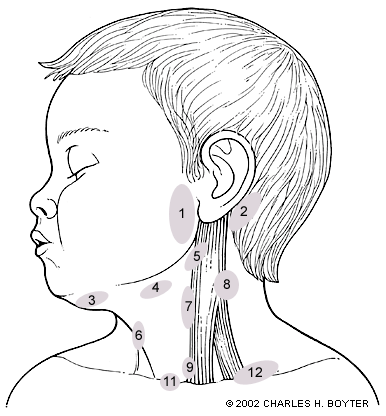
Figure 57. Palpation of SCM
(Fuloria & Kreiter, 2002)
CERVICAL RANGE OF MOTION (ROM)
Due to excessive contraction of the SCM muscle, CMT often results in reduced cervical spine ipsilateral rotation and contralateral lateral flexion passive range of motion (Seager et al., 2019). Therefore, assessing cervical spine active and passive range of motion forms an essential component of the physical examination and ongoing monitoring for the effectiveness of intervention (Royal Children’s Hospital, 2019a).
For more information on cervical spine range of motion assessments
VISUAL TRACKING
Occasionally, Torticollis may arise due to different ophthalmic conditions that cause the infant to adopt an abnormal head position in order to maintain binocularity and/or to optimise visual acuity (Toopchizadeh, Zolghadr, & Nabie, 2016). Therefore, screening of eye movements is imperative to identify non-muscular causes of Torticollis (Royal Children’s Hospital, 2019a). To examine an infant’s visual tracking, move a toy in the horizontal and vertical plane. It is expected the infant will be able to follow the toy with both eyes in unison (Larsen & Stensaas, 2019).
HEAD SCREENING
For more information on head screening
SPINE AND TRUNK SCREENING
For more information on spine and trunk screening
HIP SCREENING
For more information on hip screening
FOOT SCREENING
For more information on foot screening
DEVELOPMENTAL SCREENING
For more information on developmental screening
NEUROLOGICAL EXAMINATION
For more information on neurological examinations
TREATMENT OPTIONS
Infants diagnosed with CMT are not expected to spontaneously resolve (Sargent et al., 2019). When diagnosed early, CMT may be managed conservatively, seldom requiring surgery (Nilesh & Mukherji, 2013).
There is strong evidence that early physiotherapy intervention is associated with a favourable prognosis (Lee, Chung, & Lee, 2017). If physiotherapy is commenced prior to 1 month of age, 98% of infants with CMT are expected to achieve normal cervical range of motion within 1.5 months (Sargent et al., 2019). Waiting until after 1 month of age prolongs the expected physiotherapy episode of care up to 6 months and waiting until after 6 months to commence treatment may require 9 to 10 months of physiotherapy intervention with progressively fewer infants achieving normal range of motion (Sargent et al., 2019).
The rotation component usually resolves prior to the lateral flexion component. Lateral flexion persisting beyond 9 months is a red flag for further investigation (Royal Children’s Hospital, 2019a).
SLEEPING POSITIONS
For more information on sleeping positions
POSITIONING DURING PLAY
When the infant is awake and alert, playing in a supine position with toys positioned to the side of the infant that requires increased rotation range of motion is recommended. For infants with left CMT, it is recommended toys that are positioned on their left side to promote left cervical rotation active range of motion (Royal Children’s Hospital, 2019a). Similarly, a rattle or toy may be used to gain the infant’s attention in midline and then brought to the left side of the infant, thus encouraging the infant to visually track the object into a position of left cervical rotation.
When the infant has gained sufficient head control, parents are encouraged to play tilting games with the infant sitting on their lap to encourage lateral flexion in the desired direction (Royal Children’s Hospital, 2019a). For infants with left CMT, it is recommended the infant is seated on the parent’s right leg facing toward them. The parent may gently tilt the infant towards the infant’s left side, thus causing the infant to laterally flex their head to the right in order to maintain upright positioning (Royal Children’s Hospital, 2019a). The aforementioned technique may be coupled with cervical rotation to the infant’s left side by placing interesting toys and objects on the infant’s left side.

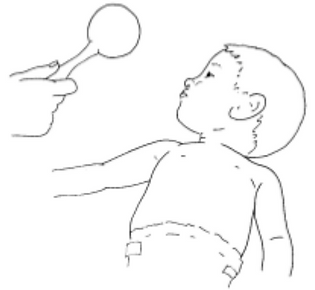

Figure 58. Cervical Rotation and Visual Tracking
(Hoppers Physio, 2018)
Figure 59. Tilting Game
(Hoppers Physio, 2018)
CARRYING POSITIONS
When the infant is awake, avoid prolonged periods of supine positioning in car seats, carriers, and bouncers as these positions place additional pressure on the infant’s skull (2018e). Instead, encourage parents to adopt various carrying positions to effectively stretch the tight SCM muscle and facilitate increased range of motion.
Note that the below exercises demonstrate passive cervical stretches for left CMT. For infants with right CMT, complete the below stretches in the opposite direction.
Cervical Rotation (0-4 months)
Cervical Rotation (0-4 months):
-
Hold the infant in a prone position with the right side of their head resting on the practitioner’s right arm
-
Place the practitioner’s left arm between the infant’s legs and support the infant’s body
-
Place the practitioner’s right arm between the infant’s arms and support the infant’s body
-
Gently encourage the infant to turn their head to the left
-
Hold the position for as long as tolerated
Ipsilateral Lateral Flexion
-
Carry the infant on their left side
-
Place the practitioner’s right arm between the infant’s legs and support the infant’s body
-
Place the practitioner’s left arm between the infant’s neck and shoulder and across the infant’s body
-
Gently raise the practitioner’s left arm to facilitate lateral flexion of the neck to the right side
-
Hold the position for as long as tolerated
Cervical Rotation (4-6 Months +)
*Note: The infant requires good head control in order be carried in this position
-
Hold the infant upright over the practitioner’s right shoulder
-
Rest the practitioner’s face against the infant’s face
-
Gently turn the practitioner’s head to facilitate rotation of the infant’s face towards their left side
-
Hold the position for as long as tolerated

Figure 60. Carrying Positions (Hoppers Physio, 2018)

FEEDING POSITIONS
Unilateral breast refusal is common for infants with CMT due to muscular and bony asymmetries making alignment for attaching and feeding at the breast challenging (Genna, 2015). Proposed positions for feeding include those that allow the infant to maintain his or her head tilt and turn whilst breastfeeding along with methods to provide support to weak or destabilised structures (Genna, 2015). When the infant is not feeding, positions and activities that facilitate active movement should be promoted (Genna, 2015).
Figure 61. Feeding Positions
(Genna, 2015)
TUMMY TIME
‘Tummy time’ refers the period in which an awake infant is positioned in prone whilst being supervised by an adult (Cummings, 2011). A lack of tummy time or intolerance of tummy time may contribute to the persistence of CMT (Royal Children’s hospital, 2019a). Therefore, parents are initially encouraged to facilitate tummy time for several minutes at least 3 times per day, and gradually increase to 10-15 minutes of tummy time 3 times per day (Cummings, 2011). Parents are also encouraged to place toys on the contralateral side to which the infant’s head naturally turns to encourage rotation of the neck in the desired direction (Kuo, Tritasavit, & Graham, 2014).

Figure 62. Tummy Time
(Royal Children’s Hospital, 2017b)
PASSIVE STRETCHING EXERCISES
Passive stretching exercises may be used to increase the length of the affected SCM muscle and subsequent range of motion. More specifically, stretches are intended to increase ipsilateral rotation and contralateral lateral flexion range of motion (Lee et al., 2017).
Stretches of the infant’s neck should never be forceful and should only be completed when the infant is calm and relaxed (Lee et al., 2017). According to the Royal Children’s Hospital (2019a), passive stretching exercises should be performed for as long as tolerated (aim for 10-30 seconds), 4-5 times per day.
To progress the below stretches, consider increasing head tilt angles, duration, frequency and/or number of repetitions (Suhr & Oledzka, 2015).
Note that the below exercises demonstrate passive cervical stretches for left CMT. For infants with right CMT, complete the below stretches in the opposite direction.
Ipsilateral Rotation (0-4 months)
-
Place the infant supine on a firm flat surface (Eg. floor or changing table)
-
Place the practitioner’s right hand on the infant’s right shoulder for stabilisation
-
Distract the infant with an interesting toy to encourage them to turn to their head to the left
-
Place the practitioner’s left hand over the infant’s right ear
-
Gently hold the infant’s head in this position and remember not to force the stretch
-
Hold stretch for as long as tolerated
Contralateral Lateral Flexion
-
Carry the infant on their left side
-
Place the practitioner’s right arm through the infant’s legs and hold their left shoulder down for stabilisation
-
Place the practitioner’s left hand over the infant’s left ear and gently bring the head into right lateral flexion
-
Gently hold the infant’s head in this position and remember not to force the stretch
-
Hold the stretch for as long as tolerated
Ipsilateral Rotation (4-6 Months +)
*Note: The infant requires good head control in order to perform passive cervical spine stretches in this position
-
Sit the infant on the practitioner’s lap facing away from the practitioner
-
Place the practitioner’s left hand across the infant’s chest and right shoulder
-
Distract the infant with an interesting toy to encourage them to turn to their left
-
Place the practitioner’s right hand on the infant’s right ear
-
Gently hold the infant’s head in this position and remember not to force the stretch
-
Hold the stretch for as long as tolerated


Figure 63. Ipsilateral Rotation
(Hoppers Physio, 2018)
Figure 64. Contralateral Lateral Flexion
(Hoppers Physio, 2018)

Figure 65. Ipsilateral Rotation
(Hoppers Physio, 2018)
SURGICAL MANAGEMENT
For infants older than 12 months of age who did not respond to conservative management, surgical release of the tight fibrous band is often required (Royal Children’s Hospital, 2007). Corrective surgery has both cosmetic and functional benefits, with the best outcomes being obtained between 1 and 4 years of age (Nilesh & Mukherji, 2013).
RECOMMENDED REFERRALS
Infants with CMT are referred to Physiotherapy when there is no improvement with home exercises after 4-6 weeks; or the infant has limited cervical rotation range of motion at diagnosis (ie. < 30°); or the infants is older than 3 months at diagnosis with more than minimal CMT; or the infant has associated moderate to severe plagiocephaly (Royal Children’s Hospital, 2019a).
Whilst routine neck imaging is not recommended, if a mass is present, but not characteristic of SCM, then ultrasound may be helpful. Furthermore, a cervical spine x-ray may detect vertebral anomalies in atypical Torticollis, and hip ultrasounds are recommended for all infants with CMT (Royal Children’s Hospital, 2019a). To arrange the aforementioned investigations, the infant must be referred to their General Practitioner.
Referral to a Paediatrician is recommended when the diagnosis is unclear or a red flag has been identified (Royal Children’s Hospital, 2019a). Red flags that require referral include acute onset Torticollis and the identification of non-muscular causes of CMT as per examination findings (Royal Children’s Hospital, 2019a).
Referral to a Paediatric Orthopaedic Surgeon should be made when the infant has shown no significant improvement by 6 months of age (Royal Children’s Hospital, 2019a).
Referral to an Ophthalmologist is recommended if the infant has poor visual tracking and/or the practitioner suspects the cause of the torticollis is of ophthalmic dysfunction (Sargent et al., 2019).